Procedures and Suggestions for Field-based Surveying
http://www.developmentoutlook.org/2013/10/procedures-and-suggestions-for-field.html
Field-based survey work requires a scientific approach, with several activities and procedures taking course simultaneously. In this post, we’re going to try to define the several phases which take place during field work and try to define procedures for improving these phases:
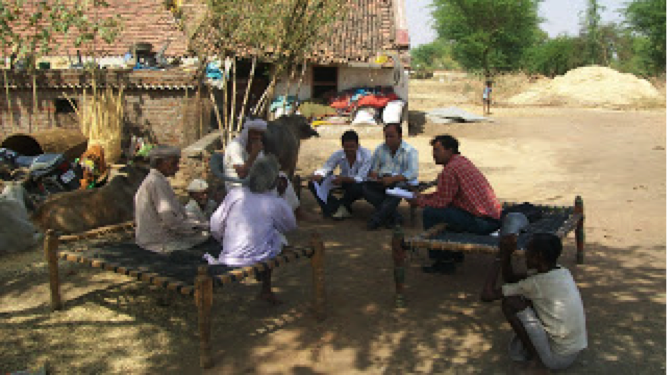
Piloting: In this phase, the main objective is to look at how the
questionnaire is set. For e.g. are the questions accepted well by the
respondents? Do skip options between questions fit? Moreover, do any new questions need to be inserted before beginning the main field surveys? In many cases,
certain sections need to be deleted from the questionnaires, or a range of
questions need to be added for better interaction or information. As a
suggestion, it is always better if experienced surveyors, supervisors or other
senior officials administer the questionnaire during this phase.
Main survey: Before a study starts, there is a
significant amount of preparatory work which needs to be completed. This
includes a proper training / briefing session for the surveyors, documenting
the places to visit, preparation of a list of respondents (if prior list is
unavailable), giving surveyors proper directions to reach their respondents
and other necessary items such as control charts, field plans etc.
In the training session, the objective is not
only to explain each question, but also to understand how well the trainees are
accepting them, understanding them and improving their surveying skills and
knowledge. Secondly, training also involves explaining each question in a very easy and colloquial way to the trainees. A pilot field visit should be
kept for the trainees in order to observe how they cope up with the work. This
is also a good indicator of their performance during the main field survey.
Once the training is finished, the team should be ready for the main study.
My suggestions here would be that certain rules /
decorum should be followed for efficient and effective fieldwork. Specifically, the
dress code of the field staff should be formal (wearing jeans and T-shirts, if
avoided would be better). Smoking and jesting among the field team or creating
a disturbance in the pilot field area should be avoided. This also earns
respect for the team from the villagers / community people.
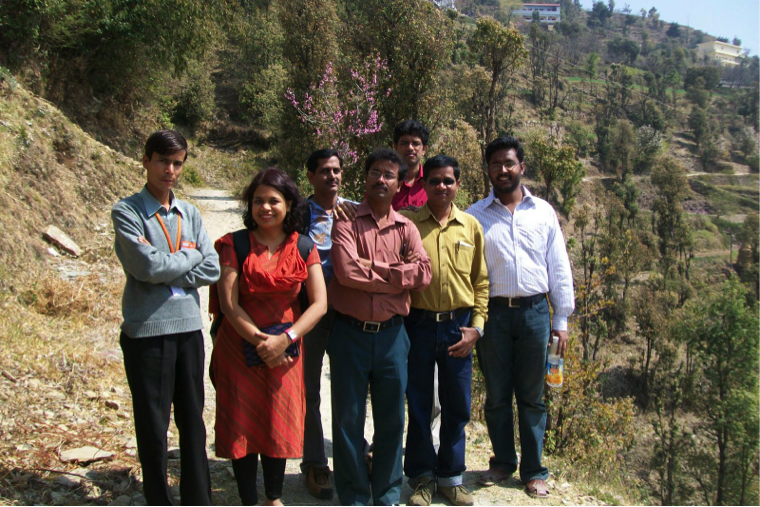
In village / slum / town where the field work is to begin, the
team leader should introduce the surveyors to the community leader / panchayat
pradhan / word councilor. This will put a bar to any kind of problem or issues
that may rise from the locality during the survey. Such an introduction can
also help when the surveyors are conducting identification of the
respondents.
The supervisor has to allocate these interviews based on the
scenario. If there are more hamlets to be covered, he/she can move along with the
team, hamlet-wise. This will help with better monitoring and supervision. On
identification of the respective household, proper introduction is necessary
and no commitments should be given to the respondent or to the villagers/community
people.
Here, I offer some suggestions for conducting a survey.
Administering the questionnaire: While administering
the questionnaire, a few things should be kept in mind.
(a) The consent is to be read out to the respondent and his/her
approval is must.
(b) One must not hurt his/her feelings with respect to gender
discrimination, or religious beliefs.
During the interview, the surveyor should not be emotional, but pragmatic. One should remain focused on the objective i.e.
conducting the survey. Secondly, one should not lead any answers for the
respondents, even if it helps decrease the survey time. Another important point
is that, during the interview, if there are multiple respondents, only one
person should give the answer, and no more than one individual should accompany
a surveyor (if allowed from a research point of view). As the questionnaire
administration proceeds, the interviewer should be able to judge the pulse of the
interviewee. In some sections, such as loans and savings, he/she can suppress
information or avoid providing sensitive information in front of others present
during the survey. In such a case, one should make the interviewee comfortable enough
to answer these sections.
At the end of the survey, the surveyor should thank the respondents
and ensure that no commitments are made. One major point which I’d like to
emphasize is that, during the interview, we should not give any information or
suggestions beyond what is to be said.
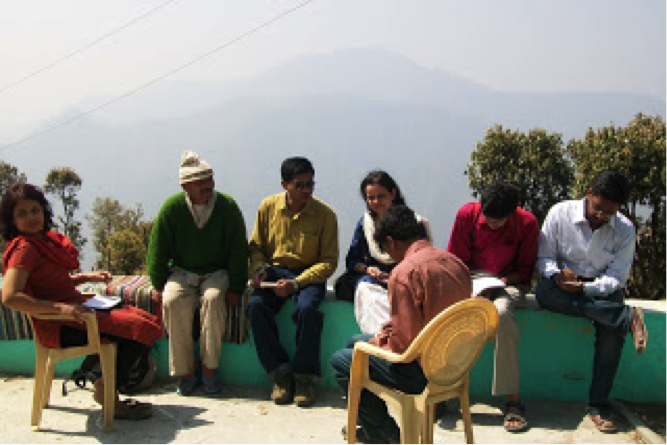
Completion of the survey in a day: At the end of a day,
the supervisor must go through all the questionnaires at least once, to avoid
any blanks or queries that need to be sorted out. Moreover, the supervisor
should count the total number of questionnaires completed. If the next day’s
fieldwork is in the same village/community, then he can give an indication of
the next visit to the respective household. This will save time as well as help
pre-plan for next day. The supervisor should also report to his/her research
assistant or field monitor daily with the problems he/she faced.
On
completion of the entire survey work, the supervisor should write a report and
submit all the documents he/she has with him/her.


