What is Social Exclusion? A Story from the field

http://www.developmentoutlook.org/2014/05/what-is-social-exclusion-story-from.html
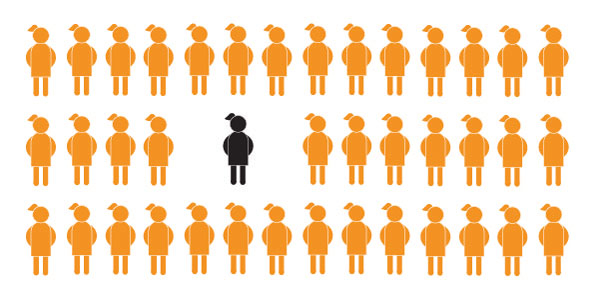 |
| Photocredit: Quirky Kid |
People could
be discriminated against because of their caste, gender, religion, sexual
orientation, HIV status etc. Further, their exclusion could take different
forms. Firstly, some individuals could be excluded from economic opportunities - for example, individuals from lower castes are
denied work in upper caste firms. Secondly, individuals could face exclusion
from political participation - for
example, a woman might find it harder to gain acceptance and be elected as a
political leader. Thirdly, individuals may be excluded from social participation - for example,
people following specific religious faiths are denied housing by people of
other faiths.
These various
forms of exclusion could stem from an inadequate institutional framework,
corruption, lack of the right incentive structure and general social and
cultural norms. Regardless of the reason, these restrictions do not
allow some people to participate as equal members of the society that they
belong to. This exclusion restricts their ability to escape poverty.
Furthermore, people who suffer discrimination on various fronts - for example,
disabled women, girls from lower castes - are often the poorest.2
This problem is exacerbated when already vulnerable groups are excluded from
access to social welfare schemes. In general, social welfare schemes work
towards providing equal opportunities for the poor, but denying them access to
social welfare schemes makes them even worse off. This is because they end up
getting excluded from the very schemes that are supposed to enhance their
capability to escape poverty and they get stuck in a poverty trap.
On one of my
field visits to villages in Mysore district, I met an old woman. I was speaking
to one of our surveyors when this old woman came to us and started asking for
help. She told us that she was a widow with no children. She didn’t have any
work and she didn’t have anyone to depend on. She went from house to house in
the village asking for food and somehow managed to live on what she got from
them. She said, “I have heard that there are many schemes through which I could
get some money. I have visited all government offices but no one is processing
anything for me. Maybe they are treating me this way because I am a woman. Or
maybe it is because I belong to a low caste and they think I have no power over
them. Could you please help me?” The surveyor
went on to explain what she could do to get help but I don’t think it was
enough.
Numerous everyday interactions and evaluation studies indicate that even though there is no dearth of good social welfare schemes in India, implementation is a serious threat. A study by Thorat and Lee (2005) on government-run Mid-Day Meal Scheme (MDMS) looks at caste discrimination and untouchability in the context of MDMS implemented in school. They find that many forms of discrimination still exist and within MDMS they find that there is discrimination in terms of segregation of children during meal times on the basis of caste and disapproval of Dalit cooks.3
The NSSO’s
66th Round data for 2009-10 indicated that under the Mahatma Gandhi National
Rural Employment Guarantee Act around 19 per cent of the total rural households
sought work but did not get employment,
exceeding the percentage of households with job cards i.e 35 percent. This may
be because of denial of Job Cards.4 A study titled “How to Overcome
the Governance Challenges of Implementing NREGA” by IFPRI looked at implementation
of NREGA in two districts of Bihar and showed that exclusion from receipt of
Job Cards was rising due to social and caste conflicts. 5
There are
numerous innovative schemes targeted at the poor both at Central and State
level but at the end of the day, having a great scheme is not enough. The most important question is, how many of
these benefits actually reach the poor and the most vulnerable segments of
society? Our goal today should not only be to come up with innovative schemes
to help poor people come out of poverty trap but it should also be to ensure
policies in such a way that they reach their targeted population.
Effective implementation is key.
? Do you have any personal experiences with social exclusion in the
field? If you do, please share your experiences in the comments section below.


