Is the Food Security Bill the answer to India’s hunger and malnutrition problems?
http://www.developmentoutlook.org/2013/07/is-food-security-bill-answer-to-indias.html
The much delayed food security
bill has recently been kindled by the media as the parliament considers holding a
special session to pass the bill. Introduced in December 2011 in the Lok Sabha,
the bill was tabled earlier this year, struggling in the country’s political
deadlock. The bill has been acclaimed for its widespread goals of providing grains
to about two-thirds of the population (50% urban and 75% rural) at extremely
low costs. Critiques argue the bill is a Congress party ploy prior to the 2014
elections, is estimated to cost 1.3 trillion rupees (nearly $20 billion) every
year, and will further increase the government’s fiscal deficit.
But the real question remains, will the bill reach the populations it aims to provide for?
But the real question remains, will the bill reach the populations it aims to provide for?
Malnutrition in India, especially
among children, is alarming, with Global Study reporting 42% children
underweight and 58% stunted by two years of age. With a specific gender
dimension, over 50% of women and 87% of pregnant women are reported anemic. Contrary
to the low ‘land to population’ ratio, for years now, India has been surpassing
record harvests and producing more food than it needs. According to the State
Food Secretaries, as of April 2013, food grain productions reached a high of 255.4
million tons (MMT) for the past year.
The success of food production
coupled with the gaping hunger and malnutrition problems highlight the gaps in
policy in addressing this issue.
Storage Facilities
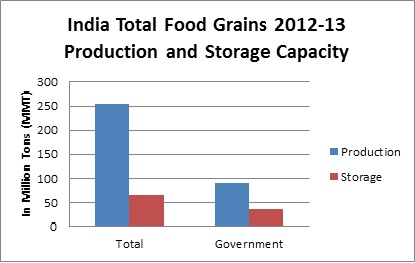
Production data is from State Food Secretaries;
Storage data is
from Credit Analysis & Research Ltd (CARE Ratings)
*Government 'production' refers to amount procured by the government from total production
Every year, large quantities of
grain produced simply rot and go to waste. Reports indicate that 20 to 40 percent of produce spoils before the reaching the consumers. Infrastructure shortcomings
including storage and transportation linkages, especially to more remote parts,
highlighting the inefficiencies in the supply chain, and resulting in avoidable
spoilage. According to Credit Analysis & Research Ltd (CARE Ratings), India
has a total of 91 MMT of storage space, with state agencies such as the Food
Corporation of India (FCI), Central Warehousing Corporation (CWC) and State
Warehousing Corporation (SWC) owning 41% of that capacity. The remaining is
owned by the private sector, cooperative societies, and farmers, which the government has rented in the past. According to
the State Food Secretaries, the government has procured 64.2 million tons (MMT)
of food grain by late March 2013, an all-time high, and almost double the
government’s current storage capacity; And it plans to procure more.
According to an interview with Mr.
Kolli Rao, Chief Risk Officer with the government’s Agriculture Insurance
Company of India (AIC), “The current storage facilities are out-dated and not
easily accessible by small and marginalized farmers.” The lack of post-harvest
infrastructure in terms of storage and transport facilities causes such ample
production to be a challenge rather than a reason for cheer. Even if the bill
is passed, the issues concerning storage are not addressed.
Distribution Channels
According to press statements by
the Food Minister, K.V. Thomas, the bill would allow large quantities of wheat,
rice and coarse grains such as millet to be distributed from the overflowing
storage sites. However, the methods for such distribution have not been
addressed. The scheme highlighted in the bill is proposed to be implemented
through the Public Distribution System (PDS), a system which has been severely criticized for
its 51% leakages and is riddled with corruption. Shop-owners steal or
over-charge, the beneficiaries receive poor quality food grains, and the system is heavily burdened
with red tape. Critics argue extending the PDS to monitor this mega food
program would provide another avenue for leakages.
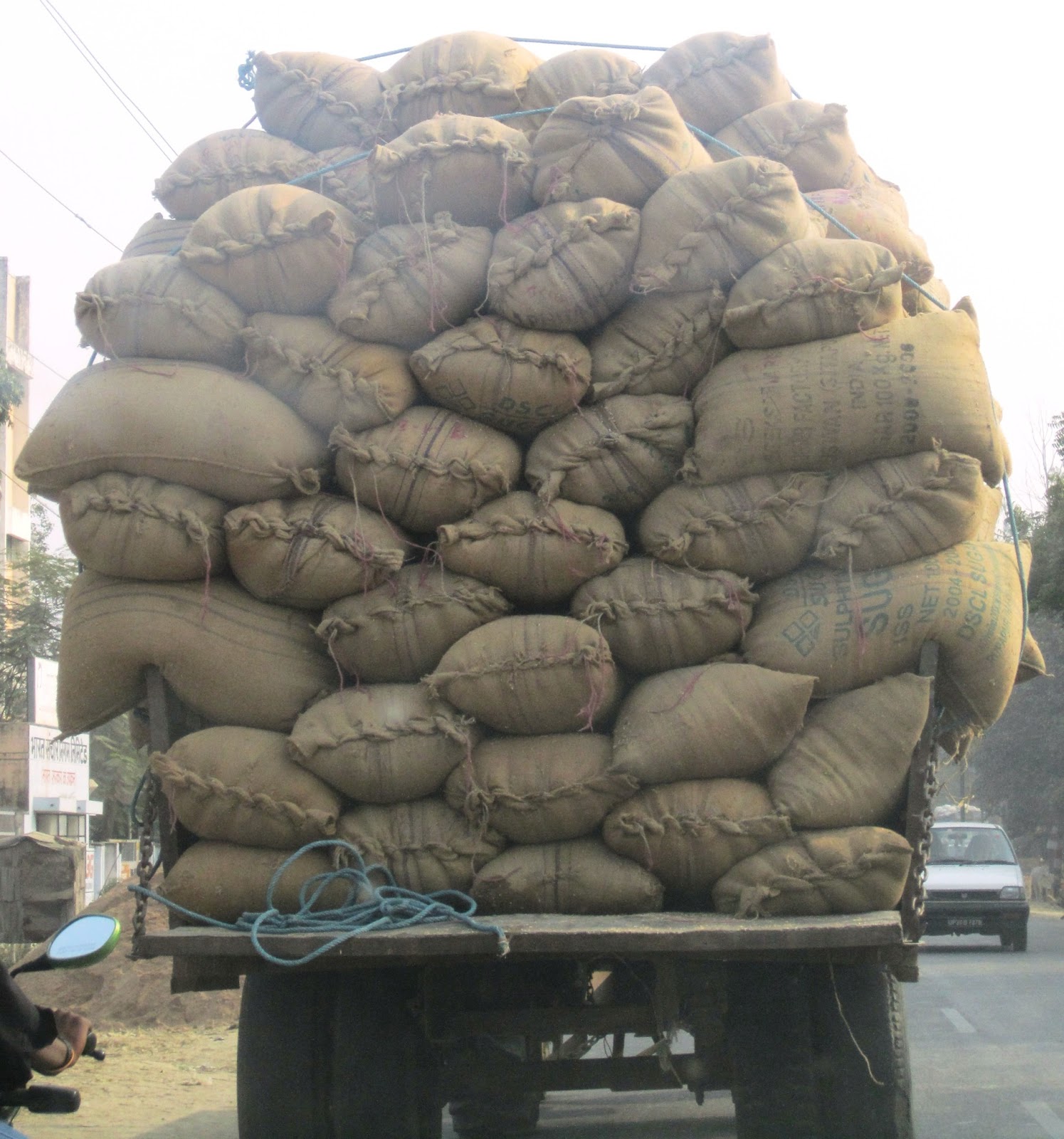 |
| Photo 1: A truck transporting grains near Lucknow, UP |
An alternative to food subsidies
includes a system of direct cash transfers (DCT), which has been successfully
experimented in other countries, such as Brazil and Mexico to resolve welfare
issues. As the amount is directly transferred to the individual’s account, it
greatly reduces most of the problems highlighted regarding the PDS scheme
above. Additionally, it will provide incentive for market players to move
towards improving the infrastructure investments to reduce wastage. The Indian
government is contemplating modelling this scheme and implementing it by
identifying individuals through the new Aadhaar card biometrics movement. With
financial inclusion through commercial banks only available in 36,000 of the country’s
600,000 villages, DCT would also be made possible through mobile banking
facilities.
Aware of the current political dynamics,
the above proposal would seem complicated and a distant reality for India.
Nevertheless, mobile technology can still be used, and has been proven to
improve the leakages in the PDS scheme in Chhattisgarh, the state with the
lowest HDI (human development index) value in India. In Chhattisgarh, the PDS
ration shops transferred management from private deals to community-based
organizations and when the stock arrives, the customers entitled receive a cell
phone message alert. A randomized study conducted by the National University of
Singapore stated that such reforms allowed for 98% of the entitled population to receive
the allocated grains.
Impact to farmers
Furthermore, often neglected in the debate regarding the bill, such large food subsidies will distort the market price of the products to an artificially lower rate. Thus, farmers who are not able to sell to the government-assured program will suffer if they take the product to the open markets.
Furthermore, often neglected in the debate regarding the bill, such large food subsidies will distort the market price of the products to an artificially lower rate. Thus, farmers who are not able to sell to the government-assured program will suffer if they take the product to the open markets.
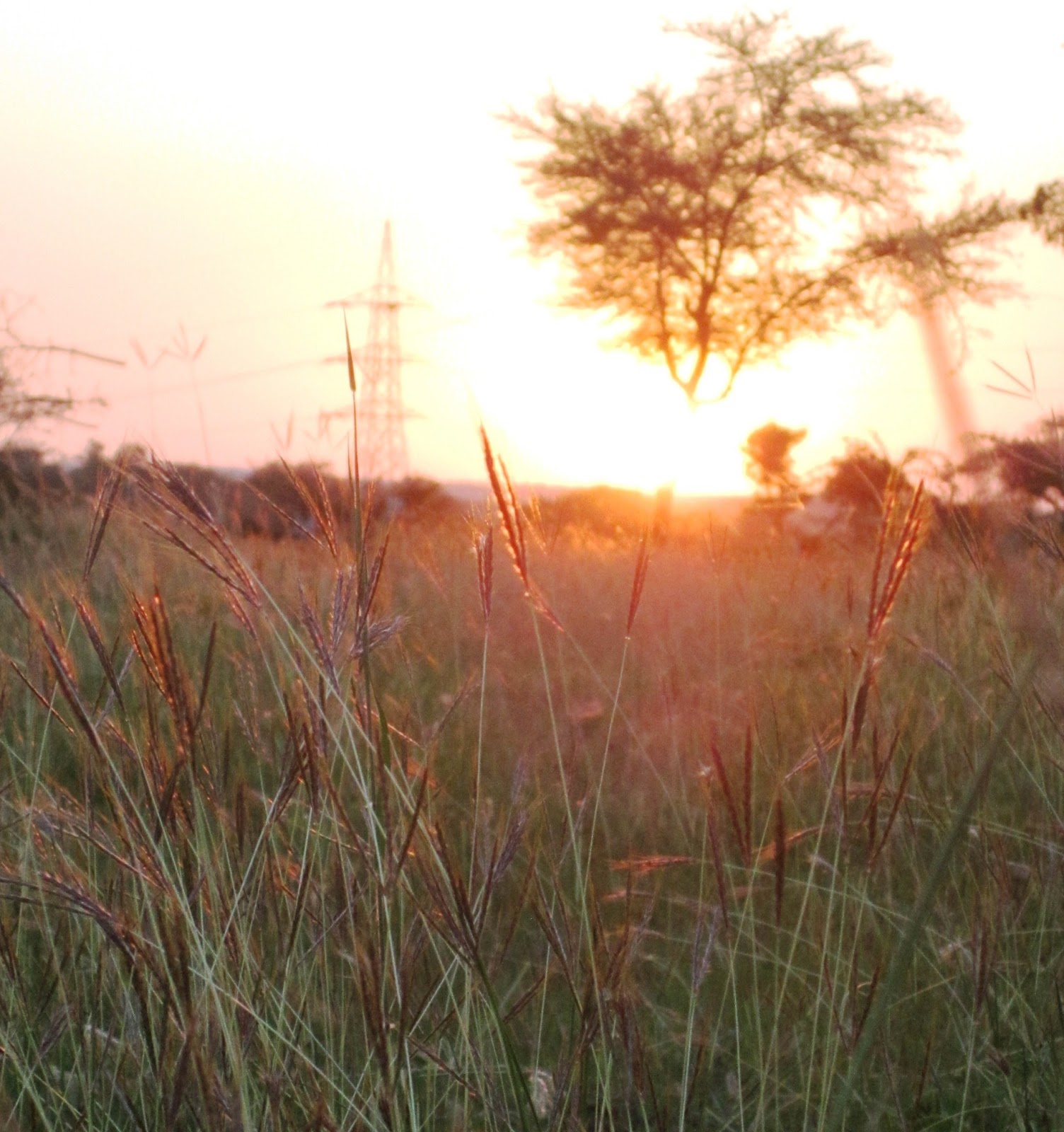
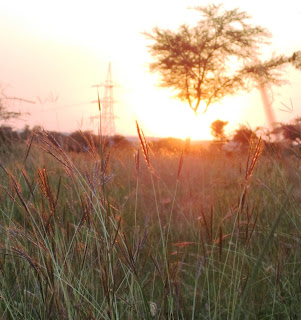
Photo 2: Fields near Satara, MH
Overall, the Food Security Bill
seems difficult to implement and to provide to the populations it aims to serve.
Areas of focus for policy makers include improving the current grain storage
facilities, either through an expansion of government ownership or through
private investments. Further, distribution mechanisms, with specific areas of
improvements for the PDS system, or through a gradual shift to DCTs must be debated
and decided. Finally, understanding the economics behind the distortion of the
grains markets with a mega food subsidy, the impact to farmers who cannot sell
to the government must be addressed. For a country that needs to feed 1.2
billion people, real food security will only be possible after the highlighted areas
have been successfully acknowledged.


Interesting Article, thanks for posting.
ReplyDeleteSecurity Dialogue. Security Dialogue aims to combine cutting-edge advances in theory with new empirical findings across a range of fields relevant to the study. server safe
ReplyDelete