
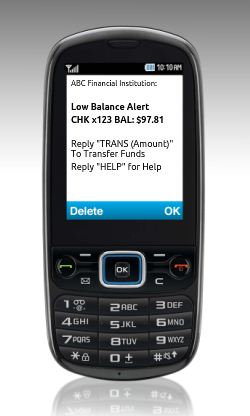
 |
| Courtesy: First Southern National Bank |
Barring a few committed ones, we all struggle to save more towards our future expenses, vacation expenses, retirement savings, kids’ college tuitions and so on. Reasons cited by literature range anywhere from lack of self-control, lack of attention, and time inconsistent preferences.
As Karlan, McConnell, Mullainathan and Zinman (2011) state, people are able to adequately predict savings needed for regular consumption, but usually forget or under-save for lumpy expenditures in future such as an unplanned concert ticket. This statement assumes that people have perfect knowledge about their future income, and people are more likely to forget about their future expenses than their future income - calling this behavior a lack of attention.
When people overlook such lumpy expenses, they over-consume today; and to meet future lumpy expenses, they either tend to forgo their regular expenses, or borrow. Though it may seem that such small lumpy expenditures do not matter in the large scheme of things, but the researchers purport that several instances of such lumpy expenditures compound over time and distort the savings regimen. Inattentive individuals pay attention to current consumption and current lumpy expenditure, and not to the future lumpy expenditure, therefore under-forecasting lumpy expenditures because:
·
People are either unaware of their inattention;
·
They overly optimistic about their ability to
forecast;
·
They are unable to provide themselves with
reminders as third parties could;
·
They either have to curtail the lumpy
expenditure or consumption because the savings plan needs to be re-calibrated;
and
·
As in self-control models, inattentive
individuals will under-save or over-borrow.
There are some savings options that help increase savings:
·
Voluntary commitment savings devices such as
401k (in the United States) encourage savings.
·
Default savings options have a large impact on
retirements savings.
Other studies indicate that tools to help modify behavior also
help smooth consumption shocks:
·
Reminders
address the lack of attention issue and help reduce forecasting failure; they do
not address the lack of self-control issue, because those who lack self-control
can still opt not to save despite the reminders. In particular:
o
Reminders don’t need to be attached to a
particular expenditure goal.
o
However, reminders attached to a particular
expenditure goal is more effective.
o
3rd party Reminders work better than
self-reminders for 1, 2.
·
Mental
accounting (keeping different real and imaginary accounts for different
spending goals) provides strong association between today’s savings and
specific future events, increasing the probability that people will attend to
savings opportunities to smooth consumption.
o
For a consumer with limited attention, an
account label may increase the likelihood of attending to a future expenditure
and optimally smoothing it.
o
Therefore, savings rates should be higher when
reminders mention a particular expense category.
To test these assertions and assumptions, researchers conducted
an experiment carried out with 3 banks in Philippines, Bolivia and Peru, where
people opened bank accounts, set the target savings for the end of the year and
monthly deposits needed to meet this goal:
·
In Philippines, people received a reminder text
message and the messages were randomized to whether it’s a gain or loss
language. Letter sent out as late reminder if deposit not made 3 days after
schedule.
·
In Peru, clients got annualized interest rate of
8% instead of 4% upon sticking to plan. 2 treatments were introduced: (1) Clients got letters with reminder of the
goal in addition to boilerplate reminders; (2) Clients got a gift either during
opening of the account, or a jigsaw puzzle after making a deposit in the
account.
·
In Bolivia, clients received a bonus interest
rate of 6% for the first 10 months following enrollment in the program
(compared to 3%), and free life and accident policy if they followed the
deposit plan. Clients missing one deposit, withdrawing before payout date,
forfeited high interest rate and policy was cancelled. Clients randomly
assigned to reminder text message, no late messages were provided.
Results from this experiment indicated that:
·
Reminders increase savings - Clients
who received reminders saved 6% more than those who did not, and were 3% more
likely to save their targeted amount by their goal due date. Findings not
significantly different across settings.
·
Specific reminders are even more effective
- Reminders that mentioned specific savings goal (in Peru example only)
increased savings by 16% relative to no reminder, while reminders that had no
specific expenditure mentioned had no effect.
·
Assumption about mental labeling needs more
research - Mental labeling which was done in Peru had no significant
effect on savings - Control was given pen on opening account, and treatment was
given a picture of the savings goal during account opening or a puzzle of the
savings goal after deposit. Neither had
an effect, especially when compared to expenditure related reminders.
·
Reminders about financial incentives also
works - In Bolivia, those who received reminders that the account
contained a financial incentive (year-end payout) increased savings, compared
to those who didn't receive this reminder.
·
Text messages are effective - Low-cost
text messages are cost-effective, and were continued in Bolivia after the study.
Therefore, specific goal oriented and targeted text messages
could be a simple and cost-effective way for banks to encourage savings and
help clients meet their savings goals. Text
messages originating from the bank also establish a sense of trust between the
bank and clients, because they are from an official source, helping clients
think banks value the mutual relationship. Removing simple barriers to savings
such as simple paper work and availability of a bank official, and enrolling in default reminder options can further increase savings.
Saving reminders can have positive impacts on saving behavior. However Text-based information dissemination does not overcome language and literacy challenges. These problems are especially pronounced in India which has a wide range of spoken languages and a literacy deficit.
ReplyDeleteDuring my two years of research work in India, I found people even struggling with deleting the inbox and keeping it clean for new incoming messages.
The problem can be overcome by replacing text with voice. In India, Awaaz.De provides hosted voice solutions that help people and organizations engage with communities in any language, leveraging the power of spoken voice and mobile phones. Organizations across India use Awaaz.De to disseminate information regarding Agriculture, Healthcare, Finance, Education and Legal issues.
With overcoming language and literacy barriers, voice also enjoys advantage of being more expressive and engaged with the rural community.
Bhaumik! I certainly see your point. It is critical to understand the phone usage, network and all other technical issues before putting money into an intervention like this. Not only that most clients don't even have the same number from one year to the next. I do like the dialing-in idea from Awaaz.De. We would love to see your write-up about that as well :)
DeleteAlso, I do think that Banks need to invest a significant amount in understanding the clients savings needs before something like this can be implemented and obviously that takes money. SO it is yet to be seen, how all of this will work out at the ground level.