
Authors: Samik Adhikari, Gautam Bastian,
Lisa Nestor
Agriculture and allied activities continue
to employ 52% of the Indian workforce and account for 17.2% of GDP. Average
land holding size however remains very low, with 70% of the land held by
farmers who own 2.47 acres (1 hectare) or less. As a result most farmers do not
benefit from economies of scale, enjoying limited profitability even in the
best of times. They are also particularly vulnerable to fluctuations in harvest
time output prices. Even a 10% swing in prices can make the difference between
stable consumption and food insecurity. The recent development of agricultural
futures markets in India holds the promise of providing farmers with a tool to
manage price fluctuation risk.
However, most farmers cannot directly
participate in futures markets because of minimum quantity thresholds needed to
make trades on the exchanges. Future exchanges may nevertheless offer important
benefits to all farmers. In particular the availability of futures price
information can help farmers form accurate price expectations and make informed
agricultural decisions about planting, crop-mix, harvest scheduling as well as
sale timing and location.
Another potential channel through which
spot and futures prices could help farmers increase their bargaining power in
price negotiations with local traders and middlemen. Many small-scale farmers
sell their produce to village traders saving the cost of transporting the
harvest to the district market. However, if farmers lack accurate market price
knowledge, the intermediaries may underpay for the farmers output preventing
them from fully realizing their potential income. Accurate market price
information can even help farmers who choose to sell district markets select which
markets to sell at.
Design and Results
Centre
for Micro Finance collaborated with Prof. Shawn Cole from Harvard Business
School and Prof. David Yanagizawa-Drott from Harvard Kennedy School, and implementation
partner Self Employed Women’s Association (SEWA) to initiate a rigorous
evaluation of farmer’s access to futures price information in April 2007.
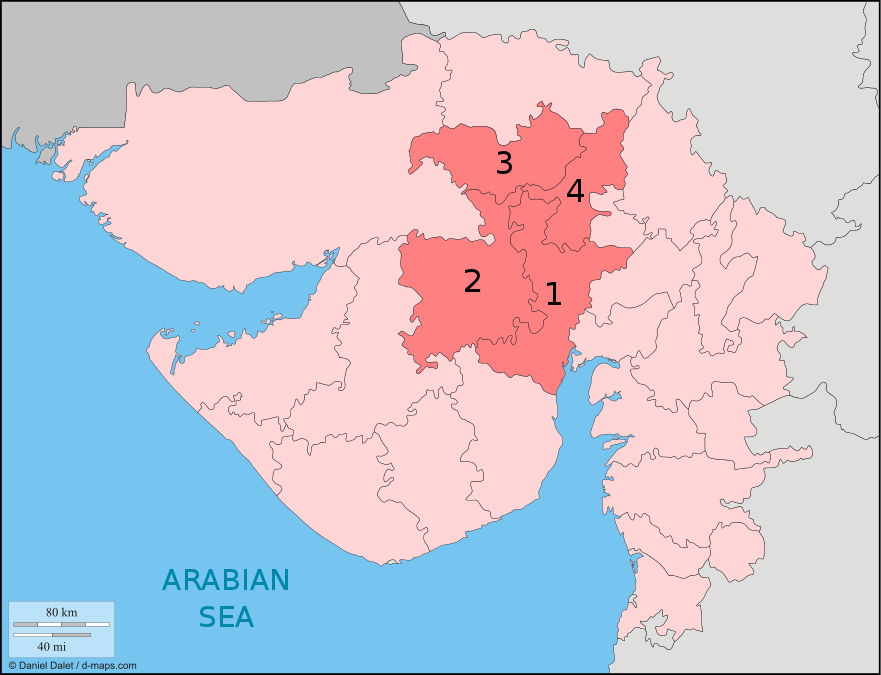
Drawing on SEWA’s established network, 108 villages were identified in
Ahmedabad, Surendranagar, Mehsana, and Vadodara districts in Gujarat, India.
Ten households were chosen from each of the 108 villages to be surveyed on a
semi-annual basis from 2007 to 2012. The survey data captured important
household characteristics as well as price knowledge and expectations, the
household’s level of trust in financial markets and data on investment and
agricultural decisions.
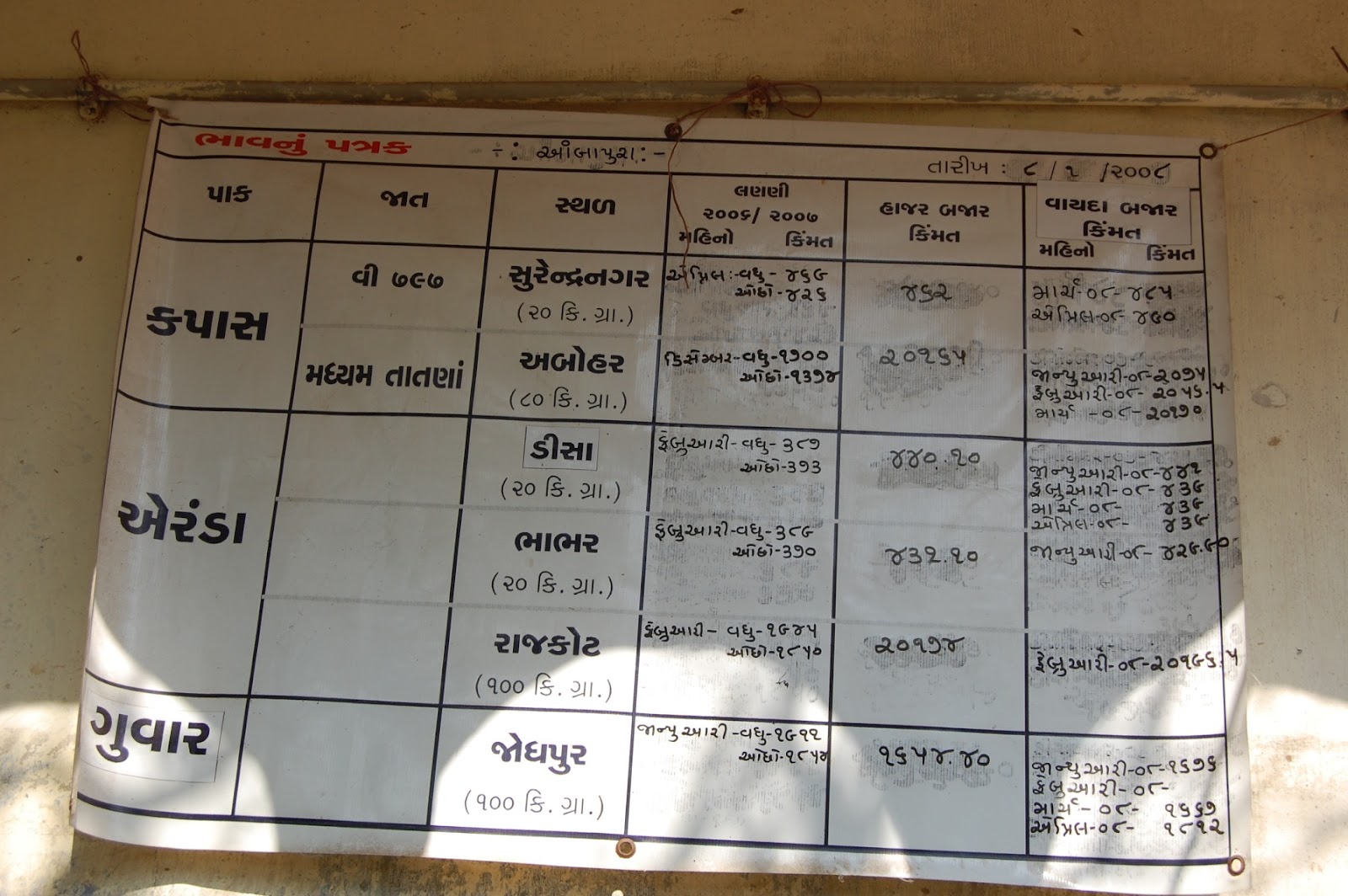
In
the first
phase, half the villages were ‘treated’ with regular price updates
using village boards, and the other half were the ‘control’. Household data
collected from 2007 to 2011 shows that households in the treatment villages are
38.3% more likely to know what a futures market is in comparison to the control
group. This finding is corroborated by the results of a test measuring
knowledge of futures markets in which households receiving spot and futures
price information are likely to score 23.7% higher than those households that
do not receive price information. The study also found that farmers receiving
price information are 11.1% more likely to be willing to trade in the futures
market and 7.3% more likely to say that farming decisions are riskier without
observing futures prices when compared to control households.
Perhaps
the most encouraging finding in the usage of the treatment implies that
participants trust the prices displayed on village boards, as well as spend
less time and money on travelling to the market to access price information.
Households in villages with village boards were 11.1% less likely to travel
outside their village to obtain spot price information. They are also 13.5 % less
likely to travel outside their village to obtain futures price information. As
travel costs in rural India are high, the savings from the reduction in travel
are an added benefit, which might justify scaling up this intervention.
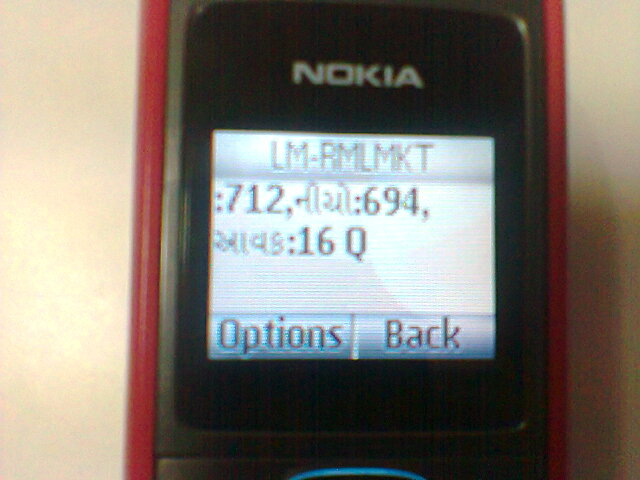
In the second phase of the intervention, 60% of the treatment households from the first phase were randomly assigned to get spot and future prices of crops directly on their mobile phones via text and voice message. The study found that 44% of the respondents in our sample who receive price information on their mobile phones said that text messages were the most important source of spot price information. While 30% of the respondents in our sample who received price information on their mobile phones quoted text messages as being the most important source of futures price information. On the other hand, of the households that do not receive price information through village boards or mobile phones, more than half primarily rely on newspapers and peer farmers as information sources. In spite of the availability of futures prices in newspapers only 20% of farmers in this group report this as the primary source of information.
Significantly, the provision of SMS price
information also improved farmers’ ability to forecast prices. We queried
farmers about expectations of prices 1-2 months in the future. Respondents who
received no SMS price information correctly predicted the future price of a
crop (within 10% of the actual price) only 35% of the time. In contrast,
respondents who received spot price information were within 10% of the realized
price on average 46% of the time, and respondents who received spot and futures
prices 47% of the time.
Policy
Implications
Providing spot and futures price
information to farmers changes their knowledge and perception of financial
markets in general and futures markets in particular, and makes them more
willing to trust and participate in financial markets. However this study does
not find any evidence of impact on harvesting, storage and selling decisions or
on the prices farmers received at harvest-time sales.
Village boards, text and voice messages
have all been very popular with farmers. The use of mobile technology makes
this an easily scalable intervention, since the cost of sending text messages
is less than a rupee per farmer (approximately USD 0.02). Using a village board
style intervention, local village leaders could be sent crop prices every day
making them local resource persons who update village boards and are also able
to answer farmer’s questions about the latest prices.
this is a must blog to any farmer!
ReplyDeletefarm fence
This info is superb for me. This site features very good content material. Thank you for the truly great article Used to do loved reading through that, I am guaranteed to take a note of your blog post and will eventually keep coming back through yet again. I wish to encourage that you just carry on your current good job, have a very good evening .
ReplyDelete