January 31, 2013

Newsletter Article: Issue #18 - Compelling to Save

Author: Parul Agarwal

Saving has lately been recognized as an inevitable instrument of financial inclusion. But this financial behaviour needs to be judicious as undisciplined saving traps people in the vicious circle of poverty that results in accumulated debt. For low-income households, situations have stunning capacity to influence behaviour and decision-making (Mullainathan et.al). Additionally, their inter-temporal choices and consequent poor planning indicate majorly loss averse behaviour i.e. their loss of utility associated with giving up a good is greater than the utility of obtaining it. Perfectly aligning with this conduct, low income people often claim that they are not able to save because of reasons like high expenses and unexpected shocks that their families are vulnerable to.

In this scenario of restrained behaviour and varied preferences, access to a no-frills account hasn’t proved to act as a trigger and because these accounts offer liquidity, they are highly leaky budgets. An alternative could, thus, be a product that requires depositor to be committed and disciplined and that constraints depositing and withdrawing operations. In contrast to the underlying premise of such a hard commitment product of enabling people to save through enforcement, Psychologists emphasise the importance of self-monitoring for successful self-regulation. Breaking a personal rule often has a devastating effect on the individual’s self-view. 

Newsletter Article, Issue #18: Saving against all odds - A Savings Story from the field

Author: Sitaram Mukherjee

This is the inspiring story of an ordinary housewife who rose above her position and succeeded in making her life worthwhile. Hailing from Narpatpur, Varanasi, Gita Devi was just another regular housewife whose job description included looking after her family and doing daily chores. Her family consisted of a husband, a son and a daughter and an aged father-in-law. Belonging to a lower middle class family they were not well off, financially. Her husband was the sole earning member of the family and like every average Indian household, Gita Devi was a homemaker. 

Newsletter Article, Issue #18: Know the Organization - Centre for Advanced Financial Research and Learning (CAFRAL)

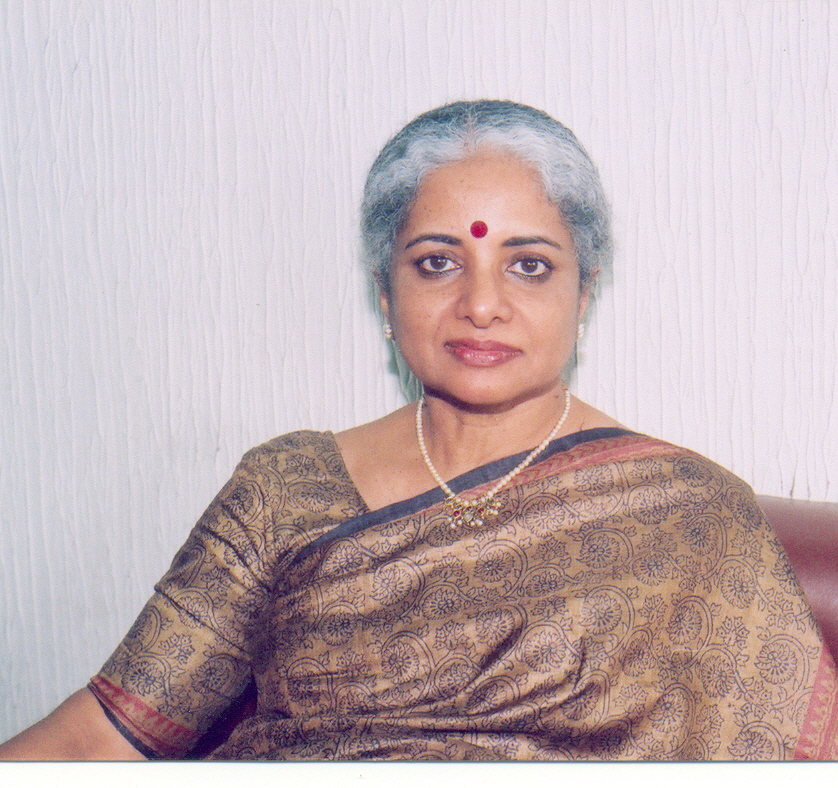
Picture Source: RBI Website


An interview with  Mrs. Usha Thorat, Director, CAFRAL. In  this  issue, we get to know more about  CAFRAL’s aspirations and future plans in the area of Financial Research. Usha Thorat, former Deputy Governor, Reserve Bank of India, took over  as  Director of the Centre for Advanced Financial Research and Learning (CAFRAL) in January 2011. CAFRAL is promoted by Reserve Bank of India as a centre of excellence for research and learning in the field of banking and finance    


1. How would you describe CAFRAL? Where is CAFRAL positioned when you take into account all other organizations that research financial services in India with respect to key objectives, priorities?
a.    Key Objectives, Priorities
b.    Current Projects, Future possibilities

CAFRAL is an institution set up and supported by the Reserve Bank of India to evolve into a global centre for research and learning in banking and finance. Relative to other research institutions, I see CAFRAL as providing a leadership and catalytic role in research on the banking and financial sector on topics having implications for policy at the national and global level.

Newsletter Article, Issue #18: Avaaj Otalo: Evaluating the effectiveness of a mobile-based extension service

Author: Ishani Desai

It is estimated that more than half of the Indian labor force is engaged in agriculture.  Given this, India’s productivity in agriculture is still quite low.  For example, India is the second largest producer of cotton in the world, after China.  Yet, Indian cotton productivity ranks 78th in the world, with yields only one-third as large as those in China.  Many factors, such as access to credit and insurance may contribute to differences in productivity; but a key possibility is that farmers lack information about ways to increase their productivity.

Agricultural research institutions in India generate a large amount of practical scientific knowledge; however, little of this information actually reaches farmers because of inefficient or nonexistent agricultural extension systems.  The Government of India spent nearly $60 million USD on public agricultural extension programs from 2009 to 2010.  Despite this, a nationally representative survey shows that just 5.7 percent of farmers report receiving information about agricultural technologies from public extension agents in India.
    
With the growing access and availability of mobile technology, the ability to deliver timely and relevant information to farmers through mobile phones is easier than ever before.  It is estimated that 36 percent of those working in agriculture have a wireless subscription and could access agricultural information via mobile phone.  Mobile technology, then, has the potential to revolutionize the way farmer’s access information and do business.

January 24, 2013

Reporting live from Satara - HDI through field glasses


My first blog post from Satara was a basic introduction to our project on long term savings and the second was about some preliminary results from our baseline data. This post is not technically about the project but is more about the setting in which we conduct it. Social scientists who are not economists begrudge our perpetual need to over-simplify things into one number or index: e.g. focusing on the literacy rate while ignoring the quality of education, gender differentials or the content of education. While I wholly support the stance of economists who need to aggregate and streamline facts to make cogent policy recommendations, there is no denying the fact that there is a lot of information that gets excluded in the process. I make no ambitious claims to override existing measures for development, but I do think that there are some informal factors that can help us put our fingers on the contextual pulse of an area… and well, it is more fun than Google-ing.

Here is a thought experiment: suppose you were visiting us in Dahiwadi, Satara and were wondering how developed it is. Imagine that this is before the era of smartphones and you did not have access to facts such as HDI (Human Development Index), growth rates and other such indices of progress that economists tend to look at. The components of the HDI are basically economic (per capita income), educational (mean years of schooling) and health (life expectancy) measures of well-being.  Below are some general ideas that help us gauge similar components without any reliance on data and are based solely on the conversations that you may have with the locals (in a hybrid  version of Marathi and Hindi).

January 22, 2013

What scheme would you like? - Let's ask the poor ..

Yesterday evening I attended a SPARK session (symposium like talks on various topics pertaining to development economics held frequently at IFMR) on the MGNREGA. While the speaker went through the history of the various similar schemes the government had conducted in the past, I began to notice a similar feeling in me. The feeling of skepticism over whether the Government knows what it is doing especially in this case. Many a time, we have seen several Government schemes fail to address what they set out to achieve. No matter how well-intentional the objectives are, there is definitely doubt on whether the right people or the right issues are being targeted ...


Today, I came across this article on the WSJ Blog with respect to India, titled - 'How to Find the Poor' - the idea to allow the poor to choose a scheme that they think would benefit them the most sounds ideal I guess. Lets look at ourselves, the privileged lot if I may say so - How often do you count yourself fortunate for the number of options that are available to you when it comes to choosing a consumer product or even while you are at a food court which boasts of a variety of options at your disposal?

If the poor were given the choice to choose from a variety of benefit or welfare schemes, I get the feeling that a kind of competition would begin within the government itself. A competition around who can devise the most likable or most preferred welfare program. Now would that not help the poor in the long run? Worth a thought I presume ...

January 21, 2013

Hard work isn't enough..

Anyone who has visited the Hyderabad field office will never forget Bala, the office boy. At the age of 22 he already has two young sons and has been working hard to support them and give them a bright future. He’s one of the smartest young people I know and if only he had had the chances I had, I’m sure he would have been my boss today and not the other way around.

His elder son started school last year and Bala’s dream was to put him in Delhi Public School. He firmly believes that giving his child a good education will set him free and give him the opportunities that he could only dream of. This is a very noble thought, unfortunately the annual fees at DPS for Kindergarten is approximately Rs. 40,000, which is 5 times his monthly salary. He settled for a cheaper English-medium school close to the office, which is still much better than any Government school close to where he lives, but also more expense than he can afford.

A Platform for Knowledge - Enabling people to learn ..

I received a rather interesting link/website via my email today. The link read as MR University and all I could think of was, "Ok, this must be another website portal of some university or college". Well, on clicking the link and looking through the contents of the site, I was pleasantly surprised. The site http://www.mruniversity.com/ is an online education portal or platform that allows users or teachers to upload short videos on topics or lessons they wish to impart. First topic that I come across is Development Economics.

The intent of the website is eloquently put out by the two economists, Tyler Cowen and Alex Tabarrok in the intro video. What started as a blog focusing on economics and its various implications in understanding why things are the way they are around us, has now an interesting addition. A video portal titled MRUniversity or Marginal Revolution University that focuses on online education with subjects pertaining to economics. It brought back to my mind, another fascinating site: https://www.khanacademy.org/ . I presume everyone here as heard of this amazing site.

(Screenshot of popular online education portal: KhanAcademy)

We live in a world where a lot of "Do-It-Yourself" guides and material are available online. It is probably high time that we use such ideas and innovation methods to even reach out to the poor and perhaps even empower them to improve their lives the lives of the people around them .. who knows? Maybe a marginal revolution can lead to something bigger ...

January 9, 2013

Vocationalisation of education in India: Current Scenario, Key Challenges and New directions

Gandhi’s Philosophy of Education: “Every handicraft has to be taught not merely mechanically as is done today, but scientifically. This is to say, the child should learn the why and wherefore of every process”.


The greatest challenge in Indian education system today is to provide skill based education to the youth. This is exacerbated by a mismatch in demand and supply for the skilled workforce. The penetration of vocational education and training remains poor not only in rural areas, but also in urban regions where there is a higher installed capacity to impart the same. This post is an attempt to make the readers understand the need of vocational education in India. Also, this is a fumbling first attempt to summarise a few recommendations on the same. 

A recent survey (61st round) conducted by the NSSO found that: