November 30, 2012

Understanding Savings Monitors

In January this year, four of us made our way into a little hamlet called Beerasandra, in Kolar District in Karnataka. This was to be the first Pilot Village of the Savings Monitors Project. We had already identified individuals who would be a part of our Saver Sample and those who would be part of our Monitor Sample in this village. One of the persons we were interviewing, Gowrappa was part of our Saver sample. Beerasandra has a small temple where the village folk often gather. Gowrappa is a priest and has been working there for several years. When we explained our project to him and told him he would have to give us a 6-week Savings Goal which he should try and meet in this time period, his answer was Rs 50. 


We told him we would open a bank or post office account if he didn’t have one and he would have to save that money in this account, Gowrappa was very happy. He didn’t have any account and was glad that we would be bearing the expenses of opening the account as well as helping with the whole process. A few days later, a village meeting was conducted where the Savers picked their respective Monitors. Every week our Surveyors would check the savings balances of these savers and inform the Monitors about the Savers progress. At the end of the 6-week period, the Monitors whose Savers reached their savings goal were given a bonus payment. The Savings Monitors project has since taken off and with each of the four pilots we conducted, we found ways of improving and sharpening our research design.

The project seeks to answer two fundamental questions:

  • Do Monitors help in increasing savings balances of people? Can they motivate them to meet their desired savings goals?
  • What are the characteristics of a good Monitor?

November 29, 2012

Building a Microfinance Sector that is Accessible to Persons with Disabilities


2:02: We begin with: Harisha Varatharajah from Handicap International. Attitudinal barriers to people with disabilities in microfinance. Handicap International (FRENCH, NOT ABLEIST) tries to find a sustainable approach to provide microfinance to the differently abled. They try to integrate access into the mainstream MFIs, not set up a different system.

2:03: They set up a program in Gujarat, to help people increase savings & credit access, encourage MFIs to stop being ableist. Disability is just not physical/superficial, there are so many ways, and so many skills differently abled people have! So true.

2:04: MFIs they worked with have changed…some changes are verifiable with data, others less so (higher self esteem). Did they randomize? Did they just do a post-intervention study? RANDOMIZE GUYS,

2:05: Uh oh, ATTRITION BIAS STRIKES AGAIN! Two NGOs dropped out to international organizational “issues”.

November 28, 2012

Leveraging the Cooperative Infrastructure: Potential for Delivering Microfinance Services


11:47: Cooperative banks were the first; NABARD promotes connections between SHGs & cooperative banks. We’re trying to get people to open accounts with banks.

11:48: Cooperative banks are involved in the MFI sector; SHGs 15% accounts are in coop banks in the country. WB, AP, Karnataka, Maharashtra have taken the lead, but it’s not enough. There are 14,000 coop bank branches;  including urban branches would be 18,000, and a huge number of cooperative federations, MACs; if all of them are involved, there’s great potential available for MFI

11:50: 3% => 6.84% NPA level has risen; we should be keep it low :/

11:51: MFIs borrowed from coop banks in the 90s. NABARD encourages this?

11:52: Most banks go into CBS in March 2013

11:54: The Rabbobank delegate is talking about her take on cooperatives.

What Does the Poor Need?: Aligning Products and Services


1:41: CGAP lady Alexia from CGAP starts. “Echo system of providers that meet this range of needs”

1:45: There is a whole audience participation sequence to illustration that demand is mysterious—we don’t always know what customers want.

1:48: Shout out Naciket Mor! Customizing products for customers!

1:49: It’s a market problem: we don’t know the size/scope of the market for financial services. That's why we need research, folks. 

1:50: Fast moving consumer goods—P&G does a really good job of catering to demand. “connect and develop approach”

1:52: Silicon Valley shout out!  Google is creative! Hell yeah it is!  #bayarea

November 27, 2012

ACCESS Conference: Reducing Vulnerability of the Poor -Health Insurance

-500 million people have no access to specialist care as 80% of specialists live in urban areas. 40% of hospitalization expenditure of the poor is managed by borrowing money or by selling assets.

-Health insurance has penetrated only 3% of population due to high premiums, poor service delivery, and exclusion of diseases.

-Health insurance schemes in India include state schemes (for tertiary care-expensive illnesses) and RSBY (secondary care), which is heavily utilized.

-Use of technology (hand-held/mobile devices) are a good investment because they become a source of data and can be used to prevent fraud.

-Dr. Arjun (of SAS Poorna Aarogya Healthcare)  is a surgeon and shared a personal experience. While he was operating, he was called out to help a 3 year old girl who had come in for emergency care. The girl's parents earned Rs. 60/day and the consultation fee was Rs. 100 (or almost 2 days of labour). When she was diagnosed, the parents didn't have enough money to buy the appropriate medications and went to a quack who gave 2 injections for Rs.20. The girl got temporarily better, but the injections failed to kill the microorganism, and she later died of meningitis. Dr. Arjun decided to step away from medical practice and is instead working on developing financial products to help the poor access quality healthcare services.

Microfinance India Summit 2012: “Financial Streams Dry Up!”

-->
Behind the slightly catastrophic title of one of this morning’s break-up sessions stood a very interesting problematic. Indeed, the panel conducted by Vineet Rai, an equity investor specialized in microfinance investments, was set to address three questions that are fundamental to the understanding and future of the microfinance industry: Where had the funding drought that affected MFIs following the October 2010 crisis come from?  And most importantly: How did we deal with it, and what lies ahead in terms of funding for micro-credit providers?

These questions were successively taken on by six high-rolling panelists: (1) CS Ghosh, the Chairman and Managing director of Bhandhan Services,  (2) Dr. Alok Pande, Director of the Department of Financial services at the Ministry of Finance, (3) S K V Srinivasan, ED of IDBI Bank, (4) P K Saha, Chief General Manager of SIDBI, (5) S Sengupta, CEO of Arohan Financial Services and (6) Prashant Thakkar, Global Business Head, Microfinance, at Standard Chartered Bank.

Let me try and summarize the points they made:

Banking on Self Help Groups: What Can We Learn For Its Second Stage Strategy


11:15: SHGs introduction by “Srinivasan”. This is a panel discussion, featuring all men, which is pretty ironic given that SHGs are primarily intended for women. This guy is really optimistic about this session, which is an hour and a half long. The video quality makes the panel discussion look like a silent film.

11:16: “Ajay” has written a book on SHGs, and is proceeding to give a speech. He’s starting with a “statement”. What ever happened to the SHG model? I don’t know Ajay, but I think we’re going to find out.

11:18: “53% of rural households have been covered by SHGs” This number sounds really, really large. What does coverage even mean? Now he’s saying coverage is 200% in some states and union territories. I may not know a lot of math, but I know that you can only cover 100% of an area… “In some ways the numbers don’t square”.

11:19: He’s citing some study which found only 51% of SHG households were poor, across all types of SHGs. Though logically, if you just study SHG members after a study, maybe SHG membership reduced poverty? That’s why we randomize!

SPARK Presentation: Savings Products - Understanding What Works

In this Spark session, Nikhil & Kenny throw light on how behavioral economics and  observations from studies on marketing and technology can be used in designing better savings products for lower income communities. The session also highlights features of savings products from impact evaluations around the globe.


Savings Products: Understanding What Works

Look out for CMF's upcoming video documentary on Savings next month!

November 26, 2012

Understanding Chhattisgarh’s livelihood landscapes through PRADAN’s initiative

In a series to understand the ground realities of livelihood opportunities for the poor, CMF is currently interviewing a set of recognized practitioners. In our first episode, we feature Saroj Mahapatra, Programme Director, PRADAN - Chhattisgarh. PRADAN is a non-government, non-profit organization which works across seven of the poorest states in India with more than 2.68 lakh rural families to improve lives of the rural poor, by instigating systems that expand sustainable livelihood opportunities.

Chhattisgarh is one of the poorest Indian states according to the measures defined by the Human Development Index (HDI). PRADAN aims to organize women from rural families into Self Help Groups to enhance their sense of agency and livelihood capabilities for developing secured livelihood opportunities.

Agro-climatically, the entire state of Chhattisgarh falls in the category of Zone VII (Eastern plateau and hills zone) and can be subdivided into three sub agro-climatic zones. North and South Chhattisgarh have similar characteristics in terms of natural endowments and demographic profiles. Central Chhattisgarh is characterized by the presence of industries and more urbanization from rest of the state. The tribal communities of Chhattisgarh inhabit the densely forested, mineral-rich districts of North and South.  Chhattisgarh’s southern region has been in the limelight because of the on-going Maoist insurgency, including a recent 13 day capture of the district collector.  Mr.Mahapatra says, “The southern region houses the Bastar Plateau, one of the most problematic and deprived zones. It is heavily forested, with almost 50% of the belt covered by forests”.

Image Credit: PRADAN website (www.pradan.net)

Further, Mr. Mahapatra explains, “Here in Chhattisgarh, more than 80% population depends on agriculture. Main crops are paddy, maize, pulses and oil seeds  Over 70% of the total workers excluding marginal workers are engaged in cultivation or as agricultural laborers  However agriculture is rain-fed as only 21% of the net sown area is irrigated. Though 67% of the total cropped area is rice, the productivity of rice per hectare is very less. Agriculture is the major source of income for the rural households in Chhattisgarh and income from agriculture is supplemented by income from wage labor, forest produce and livestock.”

Major developmental challenges of the area are lack of food security from cultivation, low production levels leading to less investment in husbandry of resources, limited irrigation infrastructure, limited participation of women in mainstream agriculture, underdeveloped markets and services related to agriculture, limited accessibility to government schemes, and over-dependency on eroding Non Timber Forest Produce (NTFP). PRADAN’s experience of working in various poverty pockets of Chhattisgarh indicates that positive changes in the immediate micro environment through appropriate processes and technologies can bring about the desired changes in the quality of life of people and overall economic impact in the local area. According to Mr. Mahapatra, “PRADAN teams are following the comprehensive intervention approach for sustainable impact of livelihoods at the family level through community mobilization for mutual support among members, solidarity, and leveraging resources from government - creating assets, bringing resources under integrated farming system and utilizing them in an optimal but sustainable manner, increasing the productivity and total production of existing crops, and adopting new technology on farm and forest based livelihoods.”

One of PRADAN’s major drives in the last couple of years has been the introduction and promotion of an innovative rice production technique called System of Rice Intensification (SRI) with small and marginal farmers. This methodology aims to increase the productivity of rice by early transplantation of seedlings, transplanting one seedling per heel at wide spacing, and ensuring weeding and hoeing. “PRADAN has partnered with 11 other NGOs from the state to advocate this system across 16,500 farmers in 404 villages in 11 districts. The state government of Chhattisgarh has now shown interest in the drive and is willing to get this strategy across to 50,000 farmers. Currently, the production capacity of paddy in Chhattisgarh is low at about 2 metric ton per hectare, however, the potential to increase productivity to 5.5-6 metric ton per hectare exists”, says Mr.Mahapatra.

Pradan also works to enhance and improve forest based livelihood opportunities by backing scientific cultivation of lac and tasar, host plants that are available in the forest fringe areas in Chhattisgarh. When asked whether forest based livelihood interventions are affected by the protectionist policies of the local authorities, Mr.Mahapatra was quick to highlight that such programs are carried out in conjunction with government agencies such as the Department of Forest, Government of Chhattisgarh.

Highlighting the gaps in implementing livelihood programs for the poor and how research could help fill some of the holes, Mr. Mahapatra expressed the requirement of needs assessment studies. He said it was imperative to understand the micro-economic household behavior  especially in the tribal regions. Such studies will help practitioners and service providers such as Pradan identify what strategies are needed to navigate certain conflict prone zones. Pradan is seeking to understand the emerging livelihood sectors in the state, in order to replicate interventions that have worked well. It is also important to understand the geographical context of the state as the north and the south are environmentally different from the more developed central regions. As Chhattisgarh is primarily a mono-crop region, he directed researchers to look at innovative paddy production techniques.


Samik Adhikari and Deepti K.C.


Center for Microfinance at IFMR Research

The authors would like to thank Mr. Saroj Mahapatra from PRADAN for answering a list of questions on livelihood activities in Chhattisgarh and for making necessary edits to this article. 

November 20, 2012

Is Safe Box all you need to save towards the next savings goal?

Helping the poor save more towards a specific goal, could be as simple as providing them a safe, secure device for savings - something as simple as a Piggy Bank or a Safe Box.  Sounds too simple? 

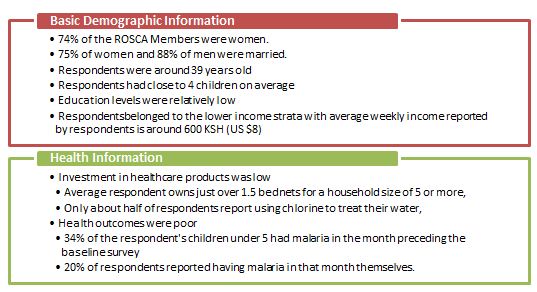
Based on a RCT conducted by Dupas and Robinson (2012) in Western Kenya, providing the poor a Safe Box increased informal savings for health services by as much as 66%, compared to the comparison group. The experiment took place in Western Kenya with 113 ROSCA (Rotating Savings and Credit Association - where a group of individuals meet for a set period of time to save and borrow) participants, who were randomly assigned to treatment or control. 


November 19, 2012

Analyzing the Business Correspondent Model (Part IV) - Policy Recommendations to Improve its Functionality

[Terminology: Banking Facilitators (BFs) disseminate education on bank products and collect documents from clients on the bank’s behalf, along with offering a host of other products.]

Our first post in the series discussed the significant advantages of using information and communications (ICT) technology based models for promoting financial inclusion and in our second and third posts, we discussed reasons for the low usage of No-Frills accounts and the problems faced by each tier in the BC model itself. In the last post in this series, we’ll discuss some policy recommendations to improve the functionality of the BC model and improve its financial viability.These policy recommendations aim to solve operational problems with an objective to improve the functioning of BCs and make the model sustainable.

The demand-walah argument that the take-up of the model could be low simply because of a lack of demand for formal savings from the poor may be countered with a slightly paternalistic, supply-sided argument that the present issues hindering the effective functioning of the model have not been able to supply the product effectively, in turn making it impossible to successfully argue for either case.

The entire objective of ‘financial inclusion’ can be questioned by asking for evidence that simply opening a bank account increases the client’s well-being. However, research studies including one by CMF have documented that for people who were assigned savings accounts, health and financial indicators exhibited positive effects when compared to people who didn’t have any formal savings mechanisms at all. This may be due to the significantly less risky nature of formal finance or the simple principle that the propensity to consume cash-in-hand is always higher.

Still, we face the question of a lack of demand. In conjunction with the policy recommendations below, each heading discussed also points to major issues present in the model which are currently hindering a successful take-up of the model by the unbanked population.

 I. Product Diversity

CMF’s upcoming research indicates that most clients interviewed indicated a preference for a more diverse product mix. As of now, banks don’t view the BC channel as a profitable opportunity and face a significant amount of image risk on delegating their BC work to third parties. This restricts the products they want to offer through the channel and since most banks only allows No-Frills accounts (NFAs) to transact with other NFAs, BCs are left offering a single stand-alone product which doesn’t seem so attractive by itself. 

Clients also exhibited a demand for fixed deposits, recurring deposits, insurance schemes and other services. The the option to offer these services is directly dependent on the BC's bank, so why aren’t they offered? Again, we come back to image risk.

In order to make the channel sustainable, the scope of NFAs should be broadened and banks should be encouraged to let their BCs offer a more diverse product mix to increase revenue. If possible, utility bill payment facilities and other value added linkages should also be introduced along with NFAs. This would demand a separate department, integrated into the bank itself, dedicated to dealing the bank’s BC services. The costs incurred by the banks should be subsidized by the government for a fixed period of time, in lieu of fulfilling its financial inclusion goals.

The government should also allow government transfers, subsidies and other payments to be linked to NFAs. A few states which have adopted these accounts to channel MNREGA and social security payments have shown good results. The effort should be extended and schemes like the Indira Aawas Yojana should be channelized through BCs as well.

II. Expanding the Scope of Customer Service Points

CMF’s research indicates that CSPs should assume dual roles as CSPs for both a BC and a BF of the principal bank. This arrangement could effectively grant customers access to multiple banking services at a single service point and contribute to the greater business viability of the CSP.

In the same turn, banks and BCs should adopt common practices to encourage their agents to assume these dual roles. Furthermore, the RBI should allow CSPs to work as agents for multiple BCs and banks in accordance to their respective capabilities. This will further enhance the financial viability of agents and bolster the existing variety of client services.

III. Cash Management

As observed in our third post, risks related to cash management are a major bottleneck to the smooth functioning of the business correspondent network.

Issues of cash deficit are frequent in areas which experience significantly more withdrawals than deposits, such as remittance heavy rural areas. This problem is compounded by a mandatory limit imposed on cash balances at the CSP (balance/transaction limits in a day).

During peak government payment times, there is a chronic mismatch of cash availability versus the demand for withdrawals and money transfers which often ends in delays and poses risks to the BC’s reputation, along with the bank’s. 

Presently, BC agents are usually issued a 1:1 balance relative to their security deposit with the BC. This is due to the BCs obligations to the bank and resultant risk management practices.In view of these problems, an ideal solution would be to allow selected CSPs to access overdraft facilities at minimal cost for a shorter time period.

There should also be greater clarity with regards to the cost sharing for cash management and associated risks between the banks and BCs. In particular, banks should share the costs with BCs and/or provide better compensation to the BC/agent in question.While banks are worried about reputational risks posed by their BCs and BCs in turn by their agents, banks as well as BC’s offer minimal insurance coverage to CSPs for cash handling risks.

IV. Standardization and Documentation

There is a lack of systematic documentation of processes that all agents should follow irrespective of the BC and/or principal bank that they operate with. Standardization would build a uniformity of roles and responsibilities among agents. The same should apply to the relationship between agents and local base branch managers to help improve coordination between bank officials and BC agents.

V. Promotion and Marketing

Surprisingly little effort has been put forward to promote the model and its benefits among prospective clientele. There have been only a few recorded cases of banks and BCs organizing marketing campaigns, given that banks generally don’t consider the BC model to be a profitable venture and high marketing costs pose a threat to BC’s financial viability.

The RBI and principal banks should invest time and effort in promoting the BC model and its benefits. The RBI should also place a greater effort and emphasis on building acceptance of the BC model amongst its prospective account holders.

VI. Financial Literacy of Clients as well as BC Agents

An observed lack of financial literacy among clients means the target clientele for the BC model is largely unaware of the uses of No-Frills accounts. A certain level of financial literacy is necessary to make this model a success, as exemplified by FINO. The government, the RBI and principal banks should spearhead the implementation in order to make the BC model profitable.

Acknowledging the fact that such an effort will entail heavy monetary costs, the RBI should come out with clear guidelines for the implementation of these efforts and should consider creating a dedicated fund for these campaigns.

Also, CMF’s upcoming research study found that while BCs offer well designed training programs to their agents, they don’t usually cover basic banking functions which is essential in order to help CSPs run their business efficiently.

VII. Client selection

As discussed in our second post, around 61% of BC clientele are regular savings account holders, which effectively opposes the point of these financial inclusion drives along with inflating the financial inclusion implications of no-frills account volumes.

When the RBI assigns targets for No-Frills account drives, they should ensure that the majority of these accounts are opened by the presently unbanked to ensure their intended financial inclusion goals are simultaneously fulfilled.

These major  issues need to be tackled in order to help the BC model succeed and fulfil its immense potential. If these problems are not solved in the long run, the model could be deemed unsustainable and abandoned without giving it a fair chance to succeed. 

Apex institutions such as the RBI and principal banks need to set guidelines to promote risk-sharing between BCs and banks, which is the basis of most of the current issues brought up in this post. The RBI must acknowledge that this model is sustainable, but only in the long run with mass penetration and high transaction volumes. 

November 18, 2012

Financing higher education in India - Education Loans can never be the only solution

In my previous blogs, I have spoken in great length about the need for public expenditure in higher education. In this section, I would like to highlight one of the most preferred options for financing higher education in India, namely ‘Education Loans’.
Off late, education loan has been one of the most popular sources of financing higher education in India.

Education loans are provided by both public and private banks under the following structure:

  • Loans for 4 lakhs INR or less do not require any kind of collateral by the bank.
  • Loans for more than 4 lakhs INR are given by banks only upon provision of collateral by the lender.

Problems with financing higher education in India

The debate surrounding around the issues with financing higher education is primarily because ‘education’ is considered to be a quasi- public good. It is a public good because the benefits out of it largely affect society through human capital formation and knowledge. However, it is also considered to be a private good because it provides a platform for the individual to generate regular income for themselves through their skills. This theoretical divide in the concept of education has led to policy makers and practitioners have different perspectives about financing higher education.
Historically, the financial burden of education was borne by both State and Central Government. But, as pointed out previously, the amount of expenditure spent on education sector by the Government has been reducing over the years, which has created a huge investment gap. This trend in public expenditure has serious policy implications. Firstly, the reduction in public expenditure has forced institutions, both public and private to increase the cost per students in the form of hike in tuition fees. Secondly, there is a rise in self-financing institutions which charge tuition fees on full cost- recovery basis. This goes against the theoretical concept of financing higher education.

November 16, 2012

How is higher education financed in India?

Within the economics literature, education is considered to be one of the classic public goods (Grace, 1989). Public good is a good where benefits of engaging in the activity are accrued not just to the individual, but to society at large and thus is susceptible to under/over provision.  For example, an informed and educated citizenry can engage more ably in the democratic process, ultimately leading to a more effective government.  Unfortunately, only some of this benefit is accrued to the individual. Left to their own devices, individuals would systematically underinvest in this activity from the perspective of greater society, ultimately leading to worse outcomes for all.  In a situation where the market-based solution is essentially guaranteed to deliver an inefficient allocation of resources, it is unsurprising that the central Government of India (GOI) considers education to be one of the country’s key priority sectors. 

As a result, the GOI has spent a significant amount of time, money and effort in developing this sector in terms of good quality of education, teachers, institutions, and infrastructure. While elementary and secondary education in India is largely government-financed, the same is not true in higher education, as we see a large number of private stakeholders. Although, public private partnerships have the potential to bring efficiency and healthy competition, an increased private (for profit) sector presence in higher education could be problematic.


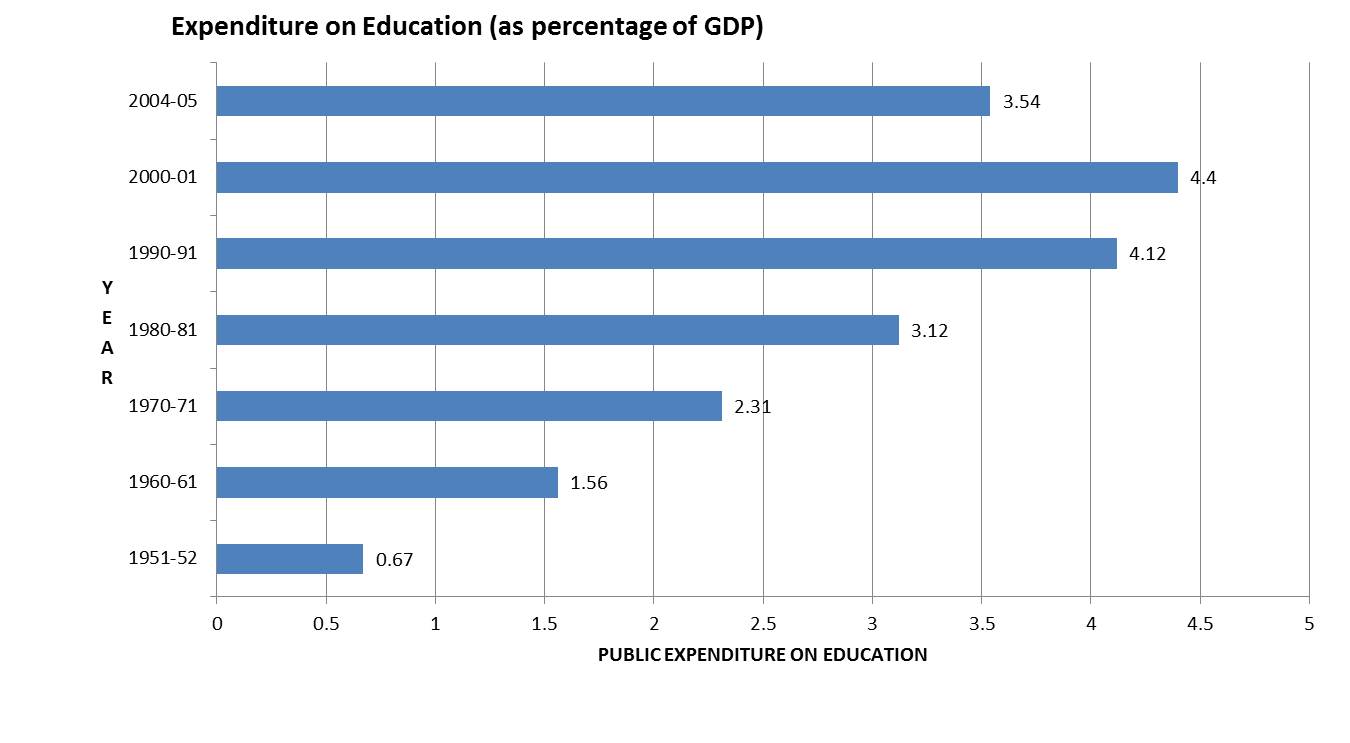
Over the last five years, public expenditure on education sector has been increasing. However, 2004-05 saw a decline in the percentage of GDP spent in the education sector, largely due to the increased share of private (for profit) sector spending in higher education.
Source: EPW, Aug 4, 2007, Ved Prakash, ‘Trends in growth and Financing of Higher Education in India’
Although a recent look at the financial budget 2012 highlights an 18% hike in allocation of resources towards education sector, the actual student share in allocation of these resources has hardly varied. This is visible in the fact that Government has adopted a ‘top-heavy approach’ in allocating resources in the education sector by spending an amount close to 150 crores in building new branches of already existing central institutions. In fact, the amount of scholarships provided by GOI as a percentage to total expenditure in higher education has also declined from 62% in 1990-91 to 24% in 2004-05 and caters to only a very small percentage of the low/middle- class family.


Source: EPW, Aug 4, 2007, Ved Prakash, ‘Trends in growth and Financing of Higher Education in India’
The above graph shows that the share of public sector in higher education has come down from 54.7% to a mere 37%. This increase in share of private sector provision of higher education is largely due to the courses offered by them in management, engineering and medical sciences at tuition fees typically five times that of a comparable public institution. These courses are mostly self-financed by the students either through funds from their family or by acquiring education loans from banks. 
The trends in financing higher education globally are no different. The decline in government expenditure on higher education is not just restricted to developing countries, but a similar trend has also been observed in developed countries. The GOI has reduced its responsibility of financing higher education in forms of hiking tuition fees, introducing user charges (charge for various services within the University), attracting foreign students to University, so that much higher fees can be charged from such students to subsidise the cost for the local students, etc. A good number of countries provided higher education for free, however now the list of such countries has reduced to only a few countries (Brazil, Sri Lanka, Tanzania, and some European countries). 
Increased dependency on private sector in higher education, lack of scholarships, and reduced public expenditure (as a % of GDP) over the last few years, indicate that GOI is inclined towards shedding its responsibility to fund higher education. Given its status as a public good and as a core sector of the Indian economy, shifting the provision of education, and its associated costs to the private sector and onto individuals actually risks the under provision of education to those that need it the most.
In my next blog post, I will talk about the problems with financing higher education in India and implications of lack of public expenditure in the education sector.

HiH Self-Help Group Training - Dreaming Big!!

CMF Picture: HIH Trainer explaining the rules of the game
I recently attended a self-help group (SHG) training session organised by Hand in Hand (HiH). Before getting into the specifics, let me give you a little more insight into the training sessions provided by HiH. HiH is an NGO which provides a range of services to the poor and creates sustainable impact through community driven development programs. One such effort from HiH has been to offer microfinance loans to SHG’s to empower their lives and bring a positive change in their livelihoods.
However, HiH believes that providing loans alone will not serve the purpose if the SHG members do not know how to utilise these loans effectively.  To bridge this gap, HiH provides extensive training to SHG’s in order to make them more capable to put these finances into good use.

November 15, 2012

Informally Successful? - A Fish-seller's Tale

Here is an interesting tale of savings from a fish-seller I have known for quite some time. His reliance on informal savings is interesting as it has helped him supplement not only his livelihood but also enhance it further. Earlier, this year, he bought a house worth Rs 24 Lakh.  

(Picture Courtesy: dreamstime.com, solely representative of the story)

November 14, 2012

Data vs Ideology - what works for the poor?

Nate Silver -the man who challenged American political pundits to follow math- not their guts. I might sound full of pride- but this is probably that time when all researchers are probably finding some Nate Silver in themselves.   

Picture Source: Vanity Fair

November 12, 2012

To Commit or not to Commit: Perspectives from a Research Paper

As part of the savings month, we at CMF have also been reading and discussing various academic papers. Last week, I happen to lead the discussion on a paper that dealt with the aspect of commitment savings. Given that farmers or the rural poor do not usually engage in formal savings products due to various reasons. It is interesting to note that various studies lead to the point that there are many takers for such products. Understanding the psychology and behaviour of the rural poor is the key to understanding why the take up of formal savings products loses to informal mechanisms.

(Picture Source: Wikimedia Commons, just for representation purposes)

Improving public welfare programs through village participation

In my last post, I raised questions about the measures to reduce corruption in a program of immense scale like MNREGA. This week, I want to shift the focus a little by trying to point out where exactly one form of corruption is likely to occur. With it, I would like to cite an innovative approach from an NGO that improved transparency and efficiency in the program at a local level.

As clichéd as it may sound, information campaigns, when spiced up with necessary ingredients, might serve as a powerful tool to raise public awareness. The pros and cons of adopting participatory measures like awareness and empowerment of local villagers, especially in ensuring proper delivery of public service goods has been highlighted in many academic studies including Stiglitz (2002), Bardan and Mookherjee (2006), and the World Development Report (2004) which emphasizes on “putting poor people at the center of service promotion”. Olken (2007) uses two different forms of awareness drives in Indonesia in a randomized setting to test the impact on “missing” expenditures in village level road projects.

Shanti’s Savings Story - Moving from informal finance to formal finance


Picture Credit: http://www.openthemagazine.com/

My name is Shanti and I live in 15 kms outside Varanasi. I have a small family with 3 children - Ruby who is 8, Rahul who is 7, and Rishu who is 1.5 years of age. My husband Kisna, is a Rickshaw puller, and I work in the neighborhood cleaning houses.  Our total household income is around Rs. 6,000 per month as we struggle to make our ends meet.  Six months ago a lovely madam, named Rita Madam came from an NGO and told us about the importance of saving - little by little, and sooner than later. Rita Madam gave us other useful advice about what savings products exist for low-income families like ours, who do not have easy access to banks in the area; now I am finally on my way to managing my money better.

November 8, 2012

Why can't Saraswati save? Understanding her dilemma!

Saraswati- an urban maid making Rs. 7,000/ month dreams of sending her children to college one day. Whenever asked why she is working, she proudly replies, “so that my children get better education”- yet- she fails to save a lump sum amount of Rs. 10,000 that she needs every year for her children’s tuition fees. 


November 5, 2012

Who are we saving? What are we saving?

"I don't earn enough to save!", "I have too many debts!", "I think savings require a huge amount to be set aside" ... How often do one come across these statements? In my experience as well as from what I have heard from my friends in the city, be it just college graduates or MBA graduates, there are often many excuses as to why savings is a difficult albeit a misunderstood affair. Is the case same for the poor? Why are poor people not using formal savings products? What or where does the problem lie?

At IFMR, I recently made a presentation on Savings: Perspectives from various studies as part of the Savings month at CMF. This November will witness the CMF blog dish out various posts/articles on this theme. We at CMF will be emphasizing on how studies on this theme (as well as stories/anecdotes from the field) has helped us understand the psychology of the poor when it comes to savings and what bearing does this have on the future. Though the presentation encompassed thoughts on how formal savings products were better than informal means and the obstacles that prevent the poor from being part of the financial inclusion drive, an interesting question popped up. "Is there any all-India study that tells us more about what drives savings behaviour?"

November 2, 2012

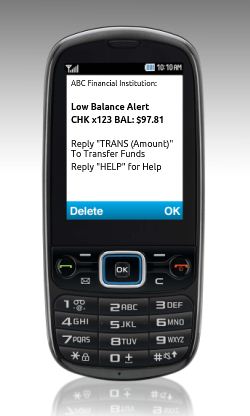
Can “Text Messages” from the Bank help you save more?

Courtesy: First Southern National Bank

Barring a few committed ones, we all struggle to save more towards our future expenses, vacation expenses, retirement savings, kids’ college tuitions and so on. Reasons cited by literature range anywhere from lack of self-control, lack of attention, and time inconsistent preferences.

As Karlan, McConnell, Mullainathan and Zinman (2011) state, people are able to adequately predict savings needed for regular consumption, but usually forget or under-save for lumpy expenditures in future such as an unplanned concert ticket. This statement assumes that people have perfect knowledge about their future income, and people are more likely to forget about their future expenses than their future income - calling this behavior a lack of attention.

When people overlook such lumpy expenses, they over-consume today; and to meet future lumpy expenses, they either tend to forgo their regular expenses, or borrow. Though it may seem that such small lumpy expenditures do not matter in the large scheme of things, but the researchers purport that several instances of such lumpy expenditures compound over time and distort the savings regimen. Inattentive individuals pay attention to current consumption and current lumpy expenditure, and not to the future lumpy expenditure, therefore under-forecasting lumpy expenditures because:     

·         People are either unaware of their inattention;
·         They overly optimistic about their ability to forecast;
·         They are unable to provide themselves with reminders  as third parties could;
·         They either have to curtail the lumpy expenditure or consumption because the savings plan needs to be re-calibrated; and
·         As in self-control models, inattentive individuals will under-save or over-borrow.

There are some savings options that help increase savings:
·         Voluntary commitment savings devices such as 401k (in the United States) encourage savings.
·         Default savings options have a large impact on retirements savings.

Other studies indicate that tools to help modify behavior also help smooth consumption shocks:
·         Reminders address the lack of attention issue and help reduce forecasting failure; they do not address the lack of self-control issue, because those who lack self-control can still opt not to save despite the reminders. In particular:
o   Reminders don’t need to be attached to a particular expenditure goal.
o   However, reminders attached to a particular expenditure goal is more effective.
o   3rd party Reminders work better than self-reminders for 1, 2.
·         Mental accounting (keeping different real and imaginary accounts for different spending goals) provides strong association between today’s savings and specific future events, increasing the probability that people will attend to savings opportunities to smooth consumption.
o   For a consumer with limited attention, an account label may increase the likelihood of attending to a future expenditure and optimally smoothing it.
o   Therefore, savings rates should be higher when reminders mention a particular expense category.

To test these assertions and assumptions, researchers conducted an experiment carried out with 3 banks in Philippines, Bolivia and Peru, where people opened bank accounts, set the target savings for the end of the year and monthly deposits needed to meet this goal:
·         In Philippines, people received a reminder text message and the messages were randomized to whether it’s a gain or loss language. Letter sent out as late reminder if deposit not made 3 days after schedule.
·         In Peru, clients got annualized interest rate of 8% instead of 4% upon sticking to plan. 2 treatments were introduced:  (1) Clients got letters with reminder of the goal in addition to boilerplate reminders; (2) Clients got a gift either during opening of the account, or a jigsaw puzzle after making a deposit in the account.
·         In Bolivia, clients received a bonus interest rate of 6% for the first 10 months following enrollment in the program (compared to 3%), and free life and accident policy if they followed the deposit plan. Clients missing one deposit, withdrawing before payout date, forfeited high interest rate and policy was cancelled. Clients randomly assigned to reminder text message, no late messages were provided.

Results from this experiment indicated that:
·         Reminders increase savings - Clients who received reminders saved 6% more than those who did not, and were 3% more likely to save their targeted amount by their goal due date. Findings not significantly different across settings.
·         Specific reminders are even more effective - Reminders that mentioned specific savings goal (in Peru example only) increased savings by 16% relative to no reminder, while reminders that had no specific expenditure mentioned had no effect.
·         Assumption about mental labeling needs more research - Mental labeling which was done in Peru had no significant effect on savings - Control was given pen on opening account, and treatment was given a picture of the savings goal during account opening or a puzzle of the savings goal after deposit.  Neither had an effect, especially when compared to expenditure related reminders.
·         Reminders about financial incentives also works - In Bolivia, those who received reminders that the account contained a financial incentive (year-end payout) increased savings, compared to those who didn't receive this reminder.
·         Text messages are effective - Low-cost text messages are cost-effective, and were continued in Bolivia after the study.

Therefore, specific goal oriented and targeted text messages could be a simple and cost-effective way for banks to encourage savings and help clients meet their savings goals.  Text messages originating from the bank also establish a sense of trust between the bank and clients, because they are from an official source, helping clients think banks value the mutual relationship. Removing simple barriers to savings such as simple paper work and availability of a bank official, and enrolling in default reminder options can further increase savings.